
Plenary
Speakers
Moving forward while looking into the past:
How the evolutionary history of mycorrhizas informs future adaptation pathways
Plenary:
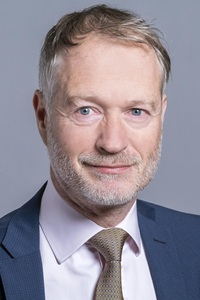
Marc-André Selosse
Professor
France
Marc-André SELOSSE is a professor at Muséum national d’Histoire naturelle (Paris) and at the University of Gdansk (Poland), where he leads research teams.
More…
He has taught at Viçosa University (Brazil) and Kunming University (China). He currently is teaching in several French universities. His research focuses on the ecology and evolution of mycorrhizas, with a focus on orchids, truffles and Sebacinales. He also has a general interest for symbiosis and its evolution. He was head of the French Botanical Society for ten years. Member of the French Academy of Agriculture and of the Institut Universitaire de France, he is an editor for four scientific journals: New Phytologist, Ecology Letters, Botany Letersand Symbiosis. He published more than 230 scientific papers and 300 outreach papers, edits as well as popular science books in French.
Rising Star Plenary:
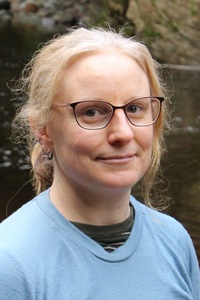
Nicola Day
Senior Lecturer
New Zealand
Nicola Day is a senior lecturer in Plant Biology at the Victoria University of Wellington.
More…
Nicola’s research focuses on the ecological impacts of disturbances on plants and soil fungi, particularly the role of plant-soil interactions in ecosystem resilience. Topics include resilience after fire and the impact of invasive plants. Nicola leads the Plant and Soil Ecology Research Group as a Senior Lecturer in the School of Biological Sciences at Victoria University of Wellington in Aotearoa, New Zealand.
Website: https://www.plantandsoilecology.com/
Genomic pathways, regulatory networks, and mycorrhizal functional ecology:
Molecular foundations of mycorrhizal adaptation and host interactions
Plenary:
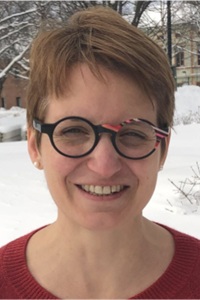
Claire
Veneault-Fourrey
Research Director
France
Claire Veneault-Fourrey is a Research Director at the National Research Institute for Agriculture, Food and Environment (INRAE) in Nancy, France and deputy-director of the ‘Tree-Microbe Interactions’ Department.
More…
With a strong background as a molecular plant pathologist and experience in molecular biology and fungal biology, Claire’s research is now devoted to understanding the molecular bases of mutualistic interactions between plants and ectomycorrhizal and endophytic fungi. Several collaborative projects are underway to comprehend (i) whether phytohormones are key regulators of the root microbiome of poplar trees, (ii) the function(s) of fungal root endophytes and (iii) whether abiotic stresses impair mutualistic fungi-root interactions.
Rising Star Plenary:
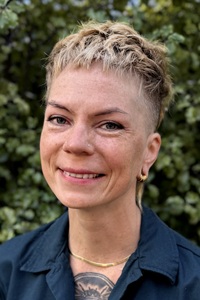
Lotus Lofgren
Assistant Professor
USA
Lotus Lofgren is an Assistant Professor in the Department of Plant & Microbial Biology at The University of California, Berkeley.
More…
Her laboratory employs integrative multi-omic, bioinformatic, bioassay, and molecular approaches to identify the mechanisms by which fungi interact with other species and to explore the ecological and evolutionary consequences of these interactions across biological scales, spanning cellular processes to interkingdom exchanges of infochemicals, nutrients, and toxins. Her research program employs multiple fungal systems, but centers on ectomycorrhizal fungi, with particular emphasis on the genus Suillus. She is currently the coordinator for The International Suillus Consortium, dedicated to the development of Suillus as a genus-level model for ectomycorrhizal biology, ecology, and evolution. Lofgren earned her Ph.D. from the University of Minnesota and completed postdoctoral appointments at both UC Riverside and Duke University, including a fellowship in the Tri-Institutional Molecular Mycology and Pathogenesis Training Program.
Proudly Sponsored by:

Mycorrhizas in dynamic ecosystems:
Plant and fungal biodiversity, biological invasions, soil and impact of climate
Plenary:
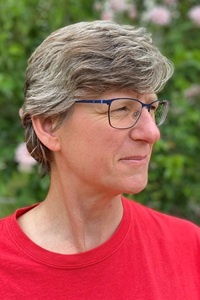
Celeste Linde
Professor
Australia
Celeste Linde is a professor in the Division of Ecology and Evolution at The Australian National University in Canberra.
More…
Celeste completed her studies at the University of the Orange Free State in South Africa, and a postdoc at the ETH, Zurich, Switzerland. Her PhD focused on the population genetics of Phytophthora cinnamomic. She has always been interested in plant-microbe interactions, and thus is passionate to learn about the fungal relationships of orchids. With the help of many students and collaborators, she investigates the patterns of orchid-fungal associations. Her lab has been active in characterising and formally naming many of the orchid mycorrhizal fungi, a necessary step to assist future studies on the biology, ecology and conservation of the fungi and their associated orchids. Using eg phylogenomic data, she investigates phylogenetic niche conservatism of fungal symbionts within Australian terrestrial orchids. Moreover, orchid symbiont preferences provided new insights into the placement of several groups with longstanding phylogenetic uncertainty.
Rising Star Plenary:

Patricia Silva-Flores
Assistant Professor
Chile
Patricia Silva-Flores is a Chilean biologist and Assistant Professor at the Centro de Investigación en Estudios Avanzados del Maule (CIEAM), Universidad Católica del Maule in Talca, Chile.
More…
She leads the Fungal and Mycorrhizal Ecology group, where her research explores plant–fungal symbioses, fungal and mycorrhizal diversity, ecological restoration, sustainable agriculture, and art–science intersections. Her work bridges basic and applied science through interdisciplinary projects across Latin America and Europe. A passionate mentor and outreach scientist, she integrates student training and public engagement into every stage of the research process. Patricia serves as Director of Communications and board member of the International Mycorrhiza Society (IMS) and is part of global initiatives such as the South American Mycorrhizal Research Network and SPUN. With a PhD in Botany, an MSc in Evolution, Ecology and Systematics, and a Biology degree, her academic path has taken her through several countries, always advocating for fungi and mycorrhizas as key components of natural systems.
Opportunities for mycorrhizas in climate adaptation and mitigation:
What’s working, what’s needed, and why
Plenary:

Olubukola Oluranti Babalola
Professor
South Africa
Olubukola Oluranti Babalola (Pr.Sci.Nat, MASSAF, FASLP, FAAS, FAS, FTWAS, FISC) is an educator, a science advocate, a STEM enthusiast, and an honorary member of the International Science Council.
More…
She is the Vice President of the Organization for Women in Science for the Developing World (OWSD, Africa region) and also the Vice President of The World Academy of Sciences (TWAS, Africa region). Olubukola, an NRF-rated scientist with an MBA, sits on several editorial boards and acts as an International Advisor to a few others. Her efforts have received numerous awards, including being a finalist in GenderInSite 2020, Clarivate’s highly cited research top 1% for 2022 and 2023, and SAWISA 2024. She has years of experience focusing on rhizosphere genomics. Olubukola is #1 in Africa for Soil Science and Plant Nutrition. She is passionate about science education, diplomacy, public engagement, policy, and capacity building. Her international experience spans the Americas, Asia, Europe, and Oceania. She appreciates global partnerships with academia and industry.
Rising Star Plenary:
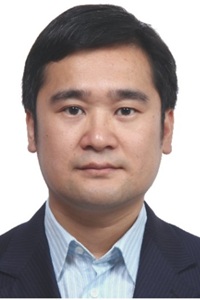
Yong Zheng
Professor
China
Yong Zheng is a professor at the School of Geographical Sciences at Fujian Normal University, Fuzhou, China
More…
Yong Zheng earned his PhD from the Research Center for Eco-Environmental Sciences, Chinese Academy of Sciences in 2009, then started his research on mycorrhizal fungal responses to global changes in Prof. Liang-Dong Guo’s group at the Institute of Microbiology, Chinese Academy of Sciences (IMCAS). He spent one year (2013-2014) at the Hawkesbury Institute for the Environment, Western Sydney University, with Prof. Ian Anderson and Prof. Jeff Powell before returning to China, where he worked at IMCAS until 2018. Thereafter, he moved to Fuzhou, where he currently heads a group working on soil microbial ecology at Fujian Normal University. Dr. Zheng is interested in microbial community ecology, forest microbiome and ecological functioning, and the effects of tree mycorrhizal type on soil carbon and nitrogen cycling in the subtropical forests. He has successfully supervised 7 Master’s students and 2 PhD students and he is currently supervising the research of 3 PhD candidates.
Proudly Sponsored by:
 ICOM 2026