
Workshops
& Field Trip
Friday, 17 July 2026
Fun Fungal Nanopore Workshop
Description:
This workshop will be all about Nanopore sequencing applied to fungal applications. The workshop will be tailored to the audience’s needs and will touch on the following:
- A brief introduction to Nanopore sequencing and its versatility, from air to amplicons, of diagnostics, metabarcodes and full genomes
- Tips & Tricks for DNA extraction and library preparation
- Tips & Tricks for amplicon sequencing at scale
- Tips & Tricks for bioinformatic analysis
- Mini-research presentations from participants
- Q&A
The main goal of the workshop is to enable you to decide if Nanopore sequencing is the right approach for you. If so, how to best implement it. You will receive a short questionnaire before the workshop so we can adjust the workshop content to the audience’s needs.
More details…
Target Audience:
Beginner to intermediate user of Nanopore. You will receive a short questionnaire before the workshop so we can adjust the workshop content to the audience’s needs.
Location:
The Hilton Cairns
Length:
7.0 Hours
Cost:
- $145 AUD
- Includes: access to full day session, morning and afternoon tea, and a stand-up lunch
- Workshop costing is additional to the ICOM2026 registration
Moderators:

Rita Tam is a final year PhD student in the Schwessinger lab at the Australian National University. She has extensive experience in analysing long-read Nanopore datasets with a focus on nuclear phased genomes of rust fungi and pan-genome graphs. In addition, she has handled all kinds of amplicon sequencing datasets as well.

Benjamin Schwessinger is a Professor at the Research School Biology at ANU. He has extensive experience using Nanopore sequencing technology since late 2016. He established several high molecular weight DNA extraction protocols for fungi. He has experience in a wide variety of Nanopore sequence analyses from diagnostic amplicons, to metabarcodes, and full genomes.
The Basics of Mapping Fungi in R
Description:
Understanding the spatial drivers and distributions of mycorrhizal fungi is more critical than ever in a changing world. This workshop, presented and supported by SPUN, provides a hands-on introduction to geospatial analysis using R, designed specifically for mycorrhizal researchers. We will walk through a logical workflow: importing field data with lat/long coordinates, connecting it to environmental variables (like climate or soil layers), and creating simple models to visualize how diversity patterns and species niches might change across a landscape. By the end of this session, you will be able to move beyond gps data and produce clear, informative maps for your next project. Participants are encouraged to bring their own datasets if available to get tips and suggestions for how to begin their analyses.
More details…
Target Audience:
Intermediate R users. No prior GIS experience required. Basic familiarity with R is recommended. Attendees should bring a laptop with R/RStudio installed.
Location:
The Hilton Cairns
Length:
7.0 Hours
Cost:
- $50 AUD
- Includes: access to full day session, morning and afternoon tea, and a stand-up lunch
- Workshop costing is additional to the ICOM2026 registration
Moderators:
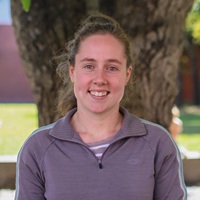
Laura van Galen is a forest and fungal ecologist currently affiliated with the University of Tasmania. Laura’s work focuses on using both global-scale geospatial analyses and local-scale field studies to understand soil microbial ecology and plant-fungal interactions. She is particularly interested in understanding the role of soil fungi in facilitating ecosystem resilience to disturbance and climate change

Justin Stewart is a post-doctoral researcher with the Society for the Protection of Underground Networks and the Vrije Universiteit Amsterdam. Justin’s work focuses on the evolutionary ecology of plant-microbe symbiosis and connecting micron-scale traits to global patterns of biodiversity and ecosystem functioning. They are particularly interested in improving uncertainty quantification methods to enhance trust in predictive models.
From Savanna to Rainforest
Exploring Tropical Australia’s Mycorrhizal Landscapes
Only 48 seats available – First come, first serve – Register now
Description:
Join botanists from the Tropical Herbarium in Cairns and mycologists from the South Australia Herbarium and Victoria Botanic Gardens for a full day in the field exploring the vegetation and habitats of tropical Australia that support the unique mycorrhizal fungi of Australia. During this catered day, you will visit a transect of the very different vegetation types found outside of Cairns: from savanna eucalypt woodland into Allocasuarina ranges, then into wet sclerophyll forests and finally end in the mountainous rainforests. If time permits, we will also visit the Mabi Rainforest, near the site where ICOM2026 delegate registrations are supporting re-vegetation of this critically endangered area. Botanists and local volunteers will guide you through the unique diversity of Australian endemics and emblematic plants in their natural habitats. Even though it is the dry season, you may even see some fungi!
More details…
Target Audience:
Anyone interested in the ecology of the local area flora that supports mycorrhizal fungi. Note that the day will include walking over uneven ground and involve stairs and will not be suitable for delegates with limited mobility.
Location:
Pick-up and drop-off is at the Hilton Cairns
Length:
8.0 Hours
Cost:
- $175 AUD
- Includes: transportation, access to all sites, guided tours, and bagged lunch
- Workshop costing is additional to the ICOM2026 registration
Already registered for the main event,
but want to add attendance to this event?
Please Register Here
 ICOM 2026